Blog
October 13, 2026

Each year, Perforce Software sets out to capture how open source practitioners are really working: which technologies they're deploying, where they're feeling pressure, how they're managing security and compliance, and what the enterprise landscape actually looks like from the inside.
That's why I'm excited to share that the 2027 State of Open Source Survey is now live.
Whether you're a longtime PHP Landscape Report reader or new to our research, taking the survey is one of the most direct ways you can shape the findings that PHP teams and IT decision-makers rely on to make smarter technology decisions. It only takes about ten minutes, it's completely anonymous, and your input goes directly into the report.
Back to topWhat Is the State of Open Source Survey?
The State of Open Source Survey is an annual research initiative conducted by Perforce OpenLogic and Zend, in partnership with the Eclipse Foundation and the Open Source Initiative (OSI). Each year, we gather feedback from developers, architects, system administrators, DevOps professionals, IT leaders, and open source practitioners around the world.
The resulting report provides a data-driven view of how organizations are adopting, managing, securing, and supporting open source software. It helps answer questions such as:
- What technologies are organizations investing in?
- What challenges are consuming engineering resources?
- How are security and compliance requirements changing?
- Which trends are shaping enterprise open source strategy?
Last year's survey included more than 700 respondents worldwide and revealed growing concerns around vendor lock-in, security maintenance, compliance readiness, and the operational burden of sustaining open source at scale. All findings are then compiled into a free report, The State of Open Source. Historically, we've also created the PHP Landscape Report, but there are some changes on the way in 2027.
Past Editions of the State of Open Source
Back to topThe PHP Landscape Report Is Now Part of the State of Open Source Survey
Beginning with the 2027 edition, PHP findings will be incorporated directly into the State of Open Source rather than being published as a standalone report.
This change reflects how PHP teams actually operate today, as modern PHP applications rarely exist in isolation. They integrate with databases, APIs, cloud services, containers, Java workloads, data platforms, and countless other open source technologies.
The 2027 survey also includes collaboration with the PHP Foundation to ensure the PHP community remains part of the conversation as we examine the broader open source ecosystem.
In short, PHP-specific insights are not going away. Additionally, all previous editions of the PHP Landscape Report will remain available for free download. Click the button below to get your copies.
Past Editions of the PHP Landscape Report
Back to topForecasting OSS Trends in 2027
One of the most rewarding parts of this project is seeing where the industry is headed. Based on findings from the 2026 State of Open Source Report and the 2026 PHP Landscape Report, here are a few trends I expect we'll continue to see in the 2027 data.
Take the 2027 State of Open Source Survey
Data Sovereignty and Lock-In Concern Will Continue to Drive Strategy
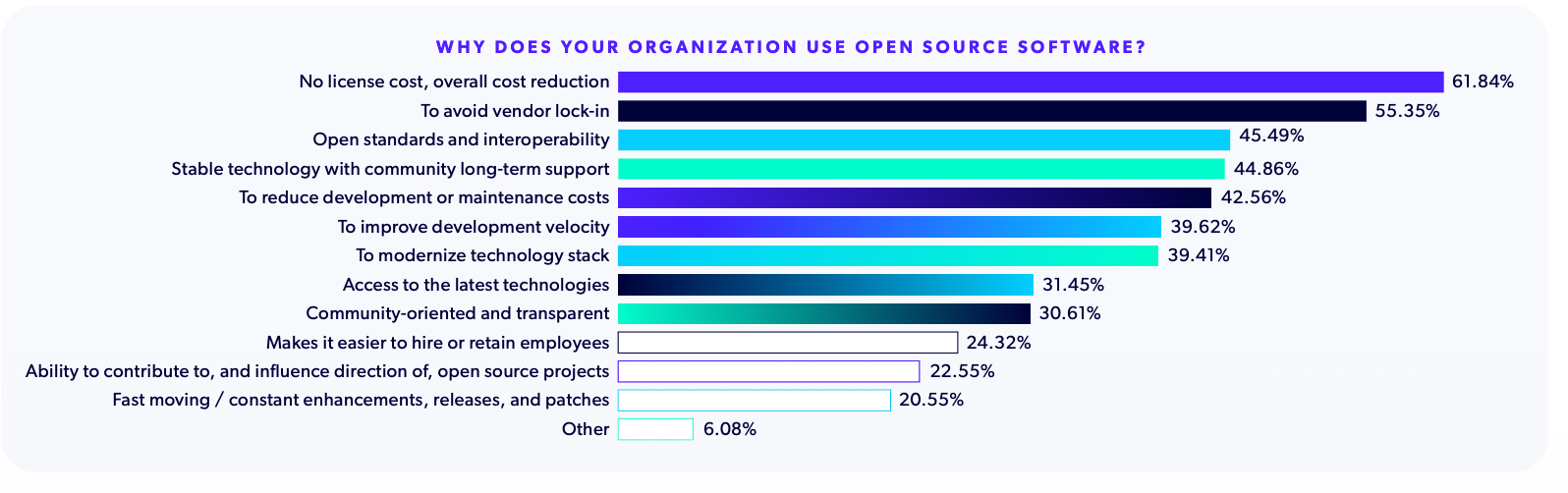
The 2026 State of Open Source Report showed a major increase in organizations citing vendor lock-in as a primary reason for adopting open source. In Europe, concerns around digital sovereignty and maintaining control over critical infrastructure emerged as especially strong motivators. Avoiding vendor lock-in was cited by 55% of respondents and increased 68% year over year. Full 2026 data is shown in the chart below.
As regulatory requirements, geopolitical uncertainty, and cloud dependency continue to evolve, I expect organizations will place even more emphasis on technology flexibility, portability, and long-term autonomy. This is particularly true in Europe and the UK, where organizations are increasingly moving toward less reliance on third-party data management tools and processes.
As AI Moves to Production, Teams Struggle With Governance and Cost
AI is now influencing nearly every aspect of software development, from code generation and automation to governance and infrastructure planning. At the same time, many organizations are still figuring out how to manage the security, compliance, operational, and licensing implications that come with AI adoption.
To meet these new and quickly evolving challenges, the 2027 survey expands its coverage of AI-related topics. I fully anticipate these concerns to become increasingly important as organizations move from experimentation to production deployment, and we want to make sure teams have the data they need to make informed decisions.
Security and Vulnerability Management Are Continuing Challenges
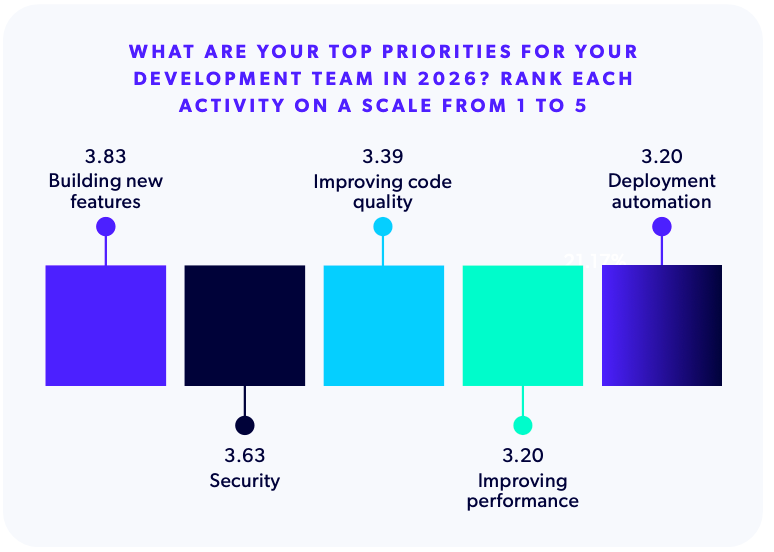
Security continued to rank among the most significant challenges reported by open source users in 2026, second only to building new features and as shown in the following chart.
Organizations also faced ongoing difficulties keeping pace with updates, vulnerability remediation, compliance requirements, and end-of-life software risks, with the full data breakdown shown below.
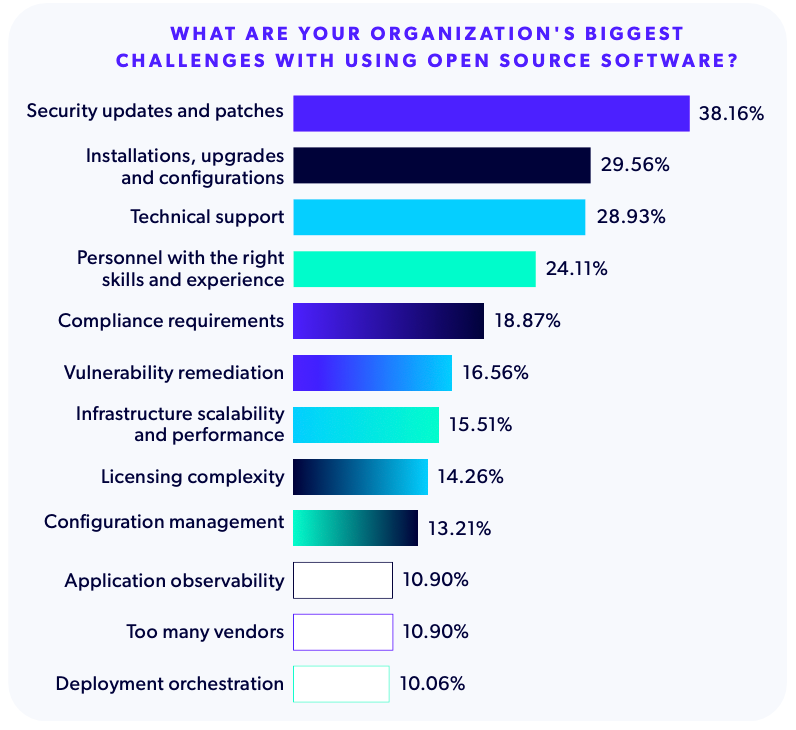
As software supply chains grow more complex, teams will increasingly need to balance rapid delivery with governance, patching, audit readiness, and risk management. I anticipate that vulnerability management maturity will remain a major differentiator between organizations in the years ahead.
PHP Will Maintain Relevancy in the Modern Web Landscape
Every year, someone predicts PHP's decline. And every year, the data tells a different story.
The 2026 PHP Landscape Report found that PHP remained one of the most widely used open source languages, tying with JavaScript among survey respondents, with the top 5 languages of the year shown in the table below.
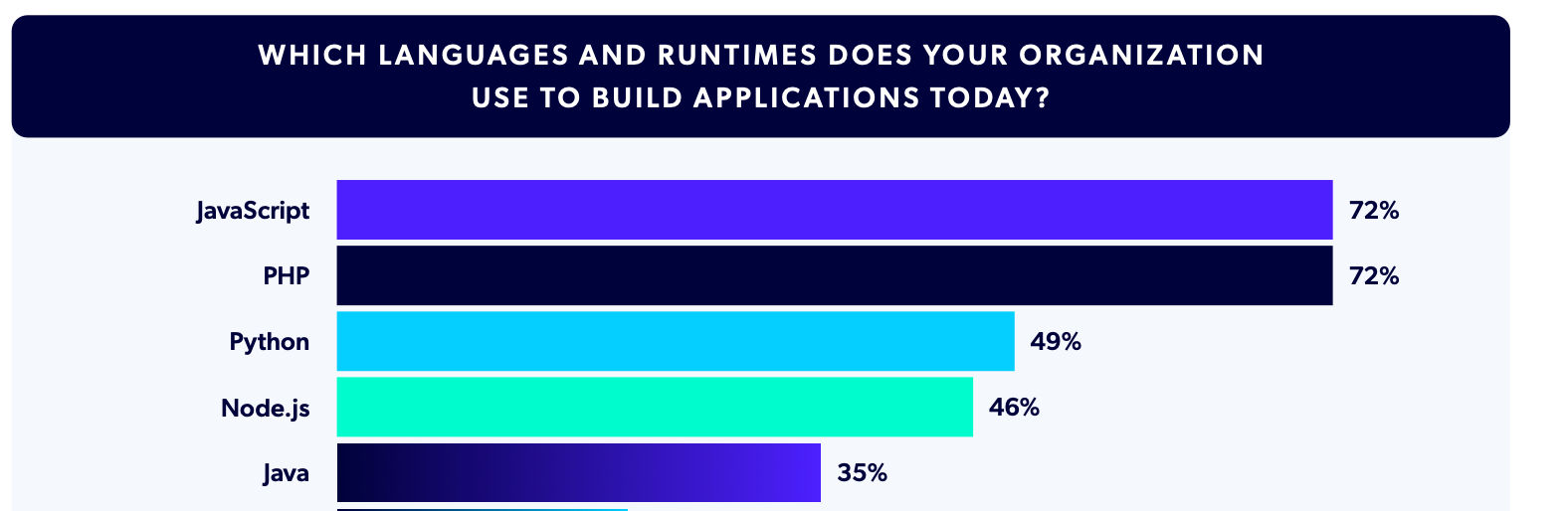
What continues to impress me is PHP's practicality. I see so many teams modernizing deliberately, adopting newer runtimes, improving security practices, integrating with modern infrastructure, and building APIs and business-critical applications that continue to deliver value. While the ecosystem does face challenges around hiring and skills continuity, the community is working hard to address them, and PHP remains a foundational technology for the web and enterprise software alike.
Back to topTake the 2027 State of Open Source Survey
The best part of this report has always been that it comes directly from the people doing the work.
If you're building, deploying, securing, supporting, or managing open source software, including PHP, I encourage you to participate. Your experiences help create a more accurate picture of today's open source landscape and provide valuable guidance for the organizations that depend on these technologies every day.
Take ten minutes, share your perspective, and help shape the 2027 State of Open Source Report.